
Confronting suicide
[Content note: discussion of suicide, transmisia, misogyny and ableism]
“Make sure the choice is yours” everyone in Cyberpunk 2077 keeps repeating. V walks over to the table, picks up the pills and the gun, and goes to the roof to ponder the next move. And it is a big decision, because at this moment, your character can end their life.
I was immensely worried about this ending choice. I was worried because the game is not always the most sensitive or responsible with the way it depicts important scenes. I was worried too, because when I played the game, I was experiencing suicidal ideation.
I regularly experience suicidal ideation. This is a time of year where it always tends to be quite a bit worse than normal. Days spent weeping, days spent trying to summon the energy just to exist, and days trying to resist the certainty that the world would be better without me. I didn’t know what playing that ending of Cyberpunk 2077 would do to my mental health. I was scared.
But the choice in the game feels correct for its inclusion. V is probably dying. Probably. Almost certainly, really. And the only way to try to stop V from dying within days is to go on a high risk mission where lots of loved ones could die – and there are no guarantees at all. V might just get a few more months. They might get nothing at all. So every possibility must be considered. The game doesn’t present the option of suicide in a rose-tinted way. Because V’s condition is chronic and debilitating, it could so easily slip into an appalling narrative calling into question the lives and value of disabled people. But actually, the game deals with disability well.
Disability is a part of V and cannot be ignored, but the main character is also free to define that disability at every stage. Whether to take medication, each with different side effects, is the player’s choice. When to get answers about the condition is the player’s choice, or whether to spend time with friend’s is up to the player. How to react to the condition is also a decision for the player. And, most importantly, every other character treats V with love and respect. V’s condition is not patronised. Friends are not carers, but they are there to offer support. They worry, but they are also there for V. They offer help in any way they can, but V is the one in control. V is still a superstar, taking on corps and helping their friends, but this is not a superhero narrative. They are strong, they are vulnerable. They are hopeful, they are fearful. They are defiant. And the other characters don’t try to change any of that, they just want to be there if and when V needs them.
As someone juggling chronic conditions, the option of suicide felt necessary. Not because that’s a preferred option at all. But because I know so many physically disabled and mentally ill people who have considered it, and thought about it a lot. But the game only presents it as an option, and does its best to make sure that it is not presented as the best or preferred outcome. Even Johnny Silverhand, the cruelest bastard around, tries to dissuade you. The game wants you to go on and do the final mission. It’s easy to miss that other option. You have to really be sure to take it. It’s a decision you must force. And with my poor mental health, looking at V’s odds and the characters I loved who would almost certainly die for me, why would I bother with the final mission? It was a choice that reflected my vulnerabilities at that time, not even V’s. But it was done. Or so I thought, but the game makes sure it isn’t quite over and you have to sit and listen to heart-breaking voicemails characters have left for V. Some characters – who you are sure will be okay because you’ve barely been in their lives five minutes – are broken. You can hear their desperate pain. Panam is angrier than I have ever seen any character (the voice acting in this game is superb). She is distraught, going from ranting that she hopes there’s an afterlife so she can beat the shit out of me/my V for doing this, to hoping I burn in hell. It’s an anger I know after a suicide. And she’s right to be angry. She did have a right to choose whether to help V or not. Just like when V decided whether to help Panam when her friend needed it most.
The last message from Misty is what stuck with me the most. You had more friends than you thought. I captured that. I’m not sure why. But I needed it. The thing is, V did have friends. And V thought, or I thought, I was protecting them by this choice. But the game shows you it isn’t about protecting them, it’s about you being failed in some way to only see that as a valid option. Not a person that’s let you down, but a system, a Night City, or maybe a failing, crumbling NHS. Sometimes the right thing is also the selfish thing. To let them be there for you, to let them love you, to let them stick their necks out for you even if it could all turn to shit later.
This game allowed me to put a gun to my head, and gently took it out of my hands. I was certain it would make my mental health worse, but I was also convinced this ending was the only honest way to play the game. Yet, I found a more honest challenge to my feelings than what I have discovered in therapy. It is a game that sits uncomfortably with me, as discussed in the review below, but it’s also one of those stories that might just have changed my life a little bit.
The review of the game
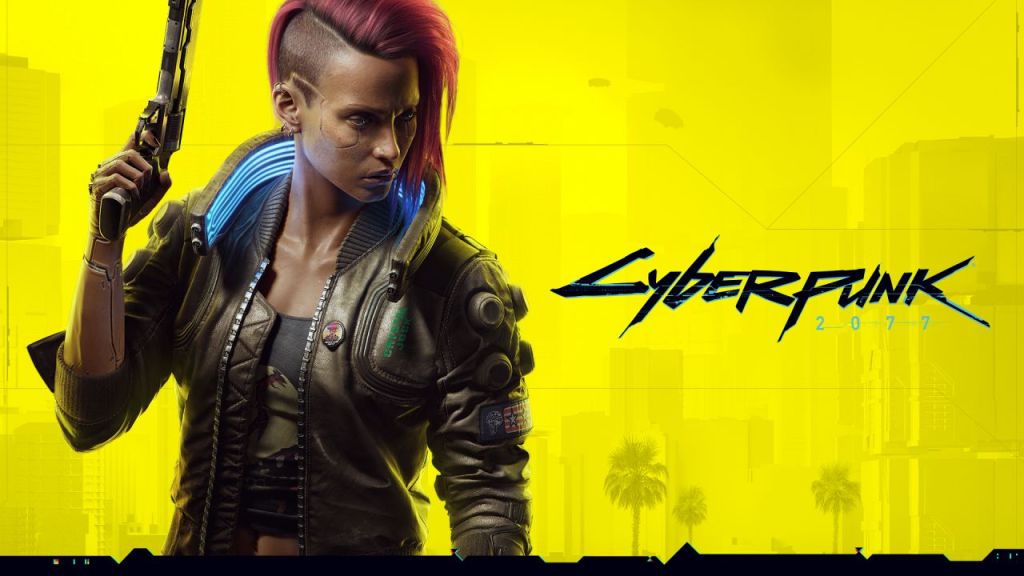
It must be mentioned first, that Cyberpunk 2077 may criticise oppressive corporations in its game and have characters throw around the insult “corpocunts”, CD Projekt Red crunched its workers to get the game out. This is rank hypocrisy. It seriously undermines any story the game could tell, by using the cyberpunk genre merely as an aesthetic while acting like the game’s villains by trying to rake in maximum profits while forcing the workers to crunch around the clock.
The game has also faced a myriad of issues at launch. The performance was so bad on consoles that Sony pulled it from its store. CDPR are facing fines for the poor performance, and investors are taking legal action. I got Cyberpunk 2077 for the PlayStation 5, because the latest generation of consoles are meant to handle the game slightly better. My game still shut itself down over twenty times, I had a game-stopping bug that forced me to restart the story, I also had to close the game down myself when the graphics froze, I was stuck in ‘combat mode’ despite killing all enemies once, several times V was stuck in a crouching position, and at least three times V refused to do anything other than to walk in slow motion. That’s not to mention the very peculiar things with cars. The performance has improved from when I first started the game, but it still crashes roughly once an hour or so. I can live with this now, because the PS5 is so quick that it takes seconds to get back into the game. But it’s frustrating to have to keep saving (autosave is not frequent enough), and while I am fairly patient with bugs and glitches because games are complex, difficult things to make work, this game was nowhere near stable enough to be launched. It is not the fault of people who tested the game either. The glitches are so frequent, it would be difficult to believe anyone at the studio had not encountered them – including the studio head – unless they were distracted with a biochip in their own heads.
When you can play the game, the experience is often confusing and unfocused but easy enough to sit back and enjoy. The gameplay is simple, which is good because the player gets very few instructions. It’s easy to miss key moments – like the ability to help your friend survive a gun fight – because there just aren’t enough signposts for players. The map system also needs work. Driving around is one of the best features of this strange GTA style game, but the map is so zoomed in that if you drive around anywhere at a substantial speed you will miss corners that you are meant to be turning off at. Perhaps spending your time driving around in literal circles was supposed to be a metaphor for the game as a whole. There is also a very rushed feel to the end mission. Early on in the game, you learn the cool ability to read BDs for visual, heat and audio. You’re basically find clues from crime scenes or plotting break ins. It’s made a really big deal of, and Judy is the one to help teach you. But midway through the game, this cool mechanic is completely dropped even though it would be useful to planning the final mission.
The rushed feel extends to characters too. The characters are the best part of the game, but sometimes the dialogue is extremely abrupt. You get beautiful scenes with Judy, who is, quite frankly, a babe, but then at times it’s like she completely forgets you are dying and could probably use her tech skills to help out. She isn’t callous. You know she cares, because she’s so well written. But it feels like they just couldn’t get everyone together at the end. The game just was not ready for it.
And perhaps that’s understandable, given the industry, the obsession with deadlines and how ambitious this project was supposed to be. When deadlines keep being pushed back, it’s pretty clear that the chances of a fully finished game being launched are starting to dwindle. But at times, you see the early ambition and the game strings you along on that promise. None more so, than when it comes to creating your character.
The player is given the choice to choose everything about V’s body – except weight, which is telling – and this includes choosing breast size, nipple type and/or what type of penis you want your character to sport. This is where Cyberpunk 2077 gets complicated, and was largely let down by its marketing and expectations. The character customisation options are supposed to shock. That’s how they were billed. This is an edgy game where you will see and do more than any other game would let you. But the game isn’t that. It’s largely mundane with its sexual adventures. Your body isn’t so shocking, even if it is designed to be spectacle for cis gamers, because you almost never see it. What this allows though is something more positive than was promoted: an intimacy with your character that few other games allow. Players – cis, trans and (so importantly) questioning trans players – can design a body how they want to, and then it’s done; it’s theirs to keep. Bodies do not make a person trans, however the lack of representation of different trans bodies is a real shame in the games industry, when you should be able to create a character exactly how you want but you almost never can. Players no longer have to imagine that their character is secretly trans, or that their character really has a body like theirs. They can make it so. It’s intimate and liberating – for some.
The problem is Cyberpunk 2077 still does not understand trans identities in the main. And this shows. So yes, you can make your body how you want, but also voices are labelled as masculine and feminine. Okay, they’ve tried and clunky executions happen when cis people try without ever stopping to do research, but this opens up a can of worms for romances. Because of the decision to designate certain features as masculine and feminine, the mechanics of the game means that your romances are filtered out based on extremely arbitrary ideas of what makes a gender. It is fine for characters to have certain sexualities. It is great that Judy is a lesbian, and fine, I suppose, that Panam is straight (although that one was a bit of a gut-punch, I won’t lie). But rejection in Cyberpunk 2077 isn’t based on gender, but on body type only. And while certain scenes are written well, such as Panam gently rejecting V but keeping an incredibly intimate and affectionate friendship with her (something even Mass Effect Andromeda did not pull off with how Liam screamed he was straight), the rejection is about V’s body, and specifically parts that are assigned random significance/gender associations, and not about V’s identity. So, once again, trans players are inhabiting a world where they aren’t really given a lot of control over their identities, beyond what their body might look like.
There is also an obsession with binaries in Cyberpunk 2077. The game is fixated on what should make a man, and what should make a woman. Even the dialogue never refers to something beyond that binary. And it does jar with a world where you can transform almost anything about yourself, but you still must be either a man or a woman.
The spectacle carries on. There are adverts for sex in the game, and trans bodies are used once more to be ogled at but not respected. This is an issue that drew a lot of attention and rightly so. Trans people should not be used for spectacle. But, I must admit, I did not notice these adverts until at least 6 hours in. I’m not sure CDPR approached the game wanting to make a spectacle of any marginalised people. But it’s ever there, in the background, and it gives the audience a sense that the developers did want a radical world but they could not imagine beyond their own narrow ideas of gender.
This certainly shows in the plot. What this game has in abundance is misogyny toward its characters. At multiple points, V ends up carrying dying or dead, naked or just about naked women around. Dying women are treated with a reverence that living women are rarely afforded. Women are raped, brutalised and driven to suicide. This should not be a surprise. The very worst element of the cyberpunk genre was always how it treated women. But the game is in conflict with itself, because it does know how to write women well. Panam and Judy rescue the game from oblivion. They are two of the best written women in the history of video games. They are angry, earnest, rebellious and tender. They murder oppressors and decide their own fate. This game knows how to avoid tropes, and write empowering content, but it seems only to be able to empower some characters if others are suffering in the most degrading ways – and it is almost always women suffering. Women, like Evelyn Parker, who are introduced only to be raped and killed off are fodder for cyberpunk stories. They are allowed no voice. They are eternal victims. It is telling that Evelyn is destroyed, but a young man who is kidnapped and assaulted is given a new shot at life (appallingly, his uncle says his abduction might have been a good thing for him). Women’s stories still end in suffering.
But here’s the thing: the writing is awful and frustrating at times, but I found myself wanting to stick with it because there were moments of brilliance. The sort of brilliance that comes from a video game as often as you see a blue moon. There is heart, and romance, and every type of love in the game. Cyberpunk 2077 reminds me of one of my favourite moments of BoJack Horseman, where Diane tells her husband that their marriage is like a seeing-eye poster; to everyone else it makes no sense but if you squint, suddenly it’s beautiful – but she’s tired of squinting. And I am exhausted. I am so exhausted of the worst tropes and excesses of science fiction. If people quit this game, I understand. Not everyone has the energy. I’m on my last reserves, truth by told. But for now, I’ll keep squinting, because at the heart of this game is something special. I just wish the marketing team had seen it because this was never an edgy game.
 Mutant Theory
Leave a comment